
Stand Up: Recognizing and Responding to Bullying

The National Center for Educational Statistics reports that approximately 20% of students aged 12-18 report being bullied. Of those who reported being victimized, 22% experienced cyberbullying.
Bullying can happen in physical, verbal, social or digital ways. No matter the form, it creates fear, silence and isolation, which can leave lasting emotional scars. We talked to two local families about their experiences with bullying, and how they were able to find solutions.
Her son came home from school one day, and it looked like he had drawn on his pants with a marker. “This wasn’t like him, but when I asked what happened, he said it was an accident,” says a Cobb County mom whose son is now in 4th grade.
The following week, he started saying he didn’t want to take certain foods for lunch anymore. Then, he started resisting playing with friends after school. His playful, silly personality was becoming more serious and sad. “That’s when I knew something was wrong,” says the mom.
For the Dunwoody mom of a middle schooler, the situation was more intense from the start. It started with rude comments in the hallway. Then, it was name calling in front of others. A few weeks later, it progressed to being cornered in the bathroom. “Better watch your back,” the bully had said.
“About two weeks after the bathroom incident, my daughter came home in tears,” says the mom. “The girl, who had been harassing my daughter for a couple of months at this point, had verbally threatened her safety.” The mom had already been in contact with the school’s administration with some complaints about the name calling, but this threat took things to the next level.
“Since it was a threat, the school was able to take things more seriously,” the mom says. “My daughter stayed home for a couple of days and the other child, the bully, was given a ‘no contact’ order.” Despite this official reprimand, the bully continued to make threats via social media. “We decided to get the police involved, and my daughter switched schools.”
As legally defined by the state of Georgia, “bullying is a power imbalance with intent to threaten and/or intimidate, that is repeated or severe, that causes harm and fear. In contrast, ‘not nice’ behavior is hurtful actions without a power imbalance or intimidation intent; it’s one-time incidents that may cause feelings of sadness or anger which may require conflict resolution and social support.”
Be on the Lookout
What both families experienced is common in bullying situations, which is why it is so important to pay attention to changes — small and large — in your child’s behavior and personality. “Be involved as much as you can,” says Certoya Gillans, a therapist at Hillside, a residential treatment and extended day program focused on the mental health needs of youth and their families in Atlanta. “As they get older, pulling away is natural, but know who your child’s friends are and know what they are doing online.”
Obvious physical signs of bullying can be unexplained injuries and things like shoes or jewelry going missing without explanation. “Abrupt changes in behavior are also signs that bullying might be happening,” says Ross Ellis, CEO of Stomp Out Bullying. “If a child is traditionally very active and social, and you see that change quickly into isolating, not eating, not interacting, even on a device, that’s a big clue.”
Other signs that your child may be experiencing bullying are declining grades, school avoidance, changes in self-esteem and sudden shift in friends. “The most serious things to be aware of are self-harm, running away from home and suicidal ideation,” says Gillans. “In these cases, seek help right away.”
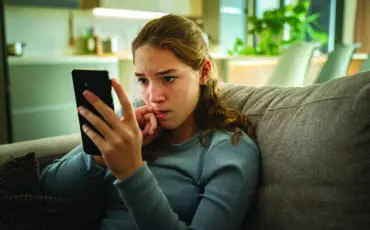
These signs can occur with in-person or cyberbullying, which can potentially be even more harmful especially for older kids who have devices. “Check your child’s device multiple times a day,” says Ellis. “You never know who is behind certain comments — could be a bot, could be an adult posing as a child.”
Cyberbullying is more invasive than in-person bullying. “It can happen throughout the day, at night, on the weekends,” says Gillans. “There’s no reprieve like there could be with a school bully.”

Confront Your Suspicions
If you are concerned your child is a victim of bullying, address it immediately and correctly. Do not ask: Are you being bullied? “This is too vague,” says Gillans. “A big question like this can cause a child to shut down.” She notes that often children don’t want to get someone else in trouble, so using a term like bullying can cause them to lie about what’s happening.
“Using the word bullying can also make your child feel like a victim,” says Gillans. “Especially for older kids, this stigma can prevent them from talking.” She recommends asking about behavior without giving it a name.
Ellis agrees. “I tell parents to bring it up in a casual way while going for a walk or watching TV. If you need a conversation starter, try, ‘I’ve been reading about bullying. I didn’t realize all that could happen. Have you seen it? Has it happened at your school? If it ever happened to you, we’re there for you. We love you and we can handle it together.’”
If your child confirms your suspicions, show them support and let them be part of the solution. Gillans recommends asking them open-ended questions like: What would help you feel safe?
Seek a Solution
Even if you have evidence of bullying or you know the parents of the bully, avoid directly addressing that child’s parent. “It could escalate things and lead to retaliation,” says Gillans. “They may also have different values and ideas of how to resolve things.”
Parents may also get defensive. “My kid would never do anything like that,” is a likely response from a direct accusation.
So, what should you do? “If it’s happening at school or a club, go to the trusted adults there to collaborate on a solution,” says Gillans.
Jeffrey Hodges, program specialist for the Georgia Safe and Supportive Schools initiative, agrees. “School administrators are trained to navigate these conversations and can serve as neutral mediators to help resolve the issue in a productive and supportive way,” he says.
Bring the evidence (screenshots, witness statements) you may have and a collaborative attitude. Digital evidence is especially important for cyberbullying. “Bullies are more emboldened in what they say online versus in person,” he says.
“If your child reports something, don’t go in screaming and yelling. Bring it up calmly,” says Ellis. “Handle it with diplomacy and document the conversations with the school.”
While you work with the school on a plan, offer your child support at home and/or seek therapy. When normal functioning is being impacted, it is time to consider therapy. “Normalize the idea of therapy,” says Gillans. “Approach it as an open-ended option. Say something like, ‘We can figure out what works for you and see if it’s helping you feel better or not.’”
Most kids don’t know how to handle bullying, especially while it’s happening, so give your child tools to utilize. “Walk away from your bully. Do not answer them. Do not let them see you sweat,” says Ellis. “If you can, give your child a few quick and calm comebacks that can work really well. Standing up to a bully can be hard but often is very effective.”
“Do not tell your child to physically fight back against the one who is bullying,” says Hodges. “It could get your child hurt, suspended or expelled.” He also recommends staying in or walking with a group of friendly peers and avoiding unsafe spaces when possible.
The best advice is talking to your child. “Educate them as early as possible about bullying. Talk to them before it starts,” says Gillans. “Teach them how to treat people kindly, so they know what behaviors and words to avoid. This way, we can start to prevent bullying before it starts.”

How to Help Your Child at Home
- Create a safe, open environment for sharing. Listen calmly to your child’s experiences and validate his feelings. Allow your child to feel seen and heard.
- Build confidence. Find an activity away from the bully in which your child can thrive. This will help rebuild self-esteem.
- Teach coping skills. Role-play various scenarios with your child to help her practice walking away from or responding to a bully while staying calm and seeking the appropriate help.
- Discuss when to be assertive. Some situations require your child speaking up for himself. Help him understand how to do this without becoming aggressive and heightening the situation.
- Collaborate with the school. Provide evidence and work with teachers and administrators in a respectful, calm way. Leading with anger will not bring the solution you want or need for your child.
What If My Child Is the Bully? Signs to Look For:

- Positive views towards violence
- Aggressive behavior towards parents, teachers and other adults
- A need to control and dominate others and situations
- Hot-tempered, impulsive and easily frustrated
- Often tests limits, boundaries and breaks rules
- Good at talking their way out of difficult and tense situations
- Show little sympathy towards others who are bullied
If you see these signs in your child or the school has reached out with concerns, talk to your child.
Ask your child: What is happening at school? Or, present them with the facts: How did you get into this fight?
If your suspicions are confirmed, do not use labels like “bully” or “bad.” Show support and love. Ellis recommends saying things like: I am your parent. I love you and want to help you. Let’s get you some help, so you can learn to be kind to others.
“Collaborating with schools and mental health professionals when needed is key to meaningful change,” says Hodges.
“Be aware of your behavior,” says Ellis. “If your home environment is kind, this helps your child know what to model. If there is a lot of aggression and volatility at home, that can also impact your child’s behavior, but in a negative way. Do your best to have a kind home.”
Be empathetic and try to understand their feelings. “Often these behaviors stem from anxiety,” says Gillans. “Therapy can be a helpful tool in these situations.”
-Tali Benjamin