

Brain Training Apps for Kids and Adults

Children’s brains process information differently from adult brains because they’re still building and reorganizing neural connections. Experiences strongly shape how children think, learn, feel and behave as the brain develops. Young children learn with their bodies and senses, often repeating what they see or hear while their attention spans and abstract thinking grow.
Brain Training Tools
It’s important to support your child’s learning and brain development. While playing, reading and exploring the world with your child are integral to this process, brain training apps and online games can also be helpful additions. Here are some top picks:
MentalUP Brain Games for Kids:
This app is specifically designed for ages 4-13 with exercises that adapt as your child grows. It features more than 150 gamified puzzles that cover areas of memory, logic and attention in a colorful, kid-friendly interface. Plus, the platform is ad free. Parents can access the working report that shows the types of games a child plays and their accuracy rating, which can help you identify areas of strength or ones that need support.
NeuroTracker:
A simple exercise where users track targets with their eyes in a 3D environment. The platform adjusts speed and difficulty based on a person’s abilities. Sessions last six minutes and can be done on any tablet, laptop or TV. This app is recommended for teens or children who struggle with concentration.
PokPok:
Ideal for younger kids ages 2-8, this Montessori-inspired app features more than 15 open-ended digital toys that encourage creativity, STEM learning and independent exploration with no ads, rules or strict language barriers. The visuals are calm and the sounds are organic to help prevent overstimulation. This app supports multi-touch, so you can play alongside your child. It is also a champion of inclusion with characters and environments that represent different races, family constructs, body types and abilities (including characters using walkers and wheelchairs).
Elevate:
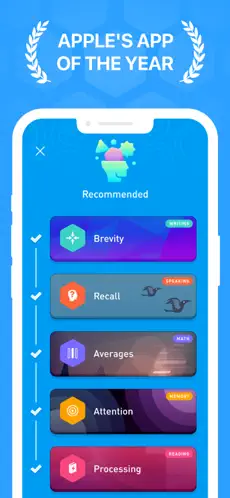
This app, which is free for a week, allows you to choose goals and starts with a quick quiz to understand the skill level in various areas. The interface is easy to use and has games that focus on vocabulary, math, memory and attention. It has daily puzzles, as well as games categorized by area. Children can start using the app as young as age 4.
Peak Brain Training:
This online platform focuses on problem solving and memory with 45 games available. Our tester liked the game “Perilous Path;” the goal is to connect white dots with a blue path while avoiding red obstacles. It’s a fun memory tester that you can get better at the more you play. Opt for the pro version if you don’t want to watch ads or want access to personalized coaching.
BrainHQ:
This app adapts to each user. Games will be a little more challenging if the child is doing well and a little easier if needed. The games are centered on attention, brain speed, memory, people skills, navigation and intelligence. You can choose from a limited selection of exercises with a free account or get full access and account data with a monthly subscription. Check out their website brainhq.com to try a few games before making an account.
NY Times Games:
This subscription gives you access to the popular games Wordle where you try to guess the daily five-letter word in less than six tries, as well as Spelling Bee. Work on crossword puzzles as a family and remember that Sunday’s is the hardest. Ask about getting a free subscription through your library or opt for the family games subscription for $2.50 per week with four log-ins.
Avoiding Screens?
Try these books and activities to boost your kid’s brain.
BrainQuest:
Offering a variety of grade-specific workbooks and trivia cards, these are a good option for screen-free learning. The series offers general learning or choose a content-specific book focused on writing, math or summer skills.
Brain Games for Clever Kids:
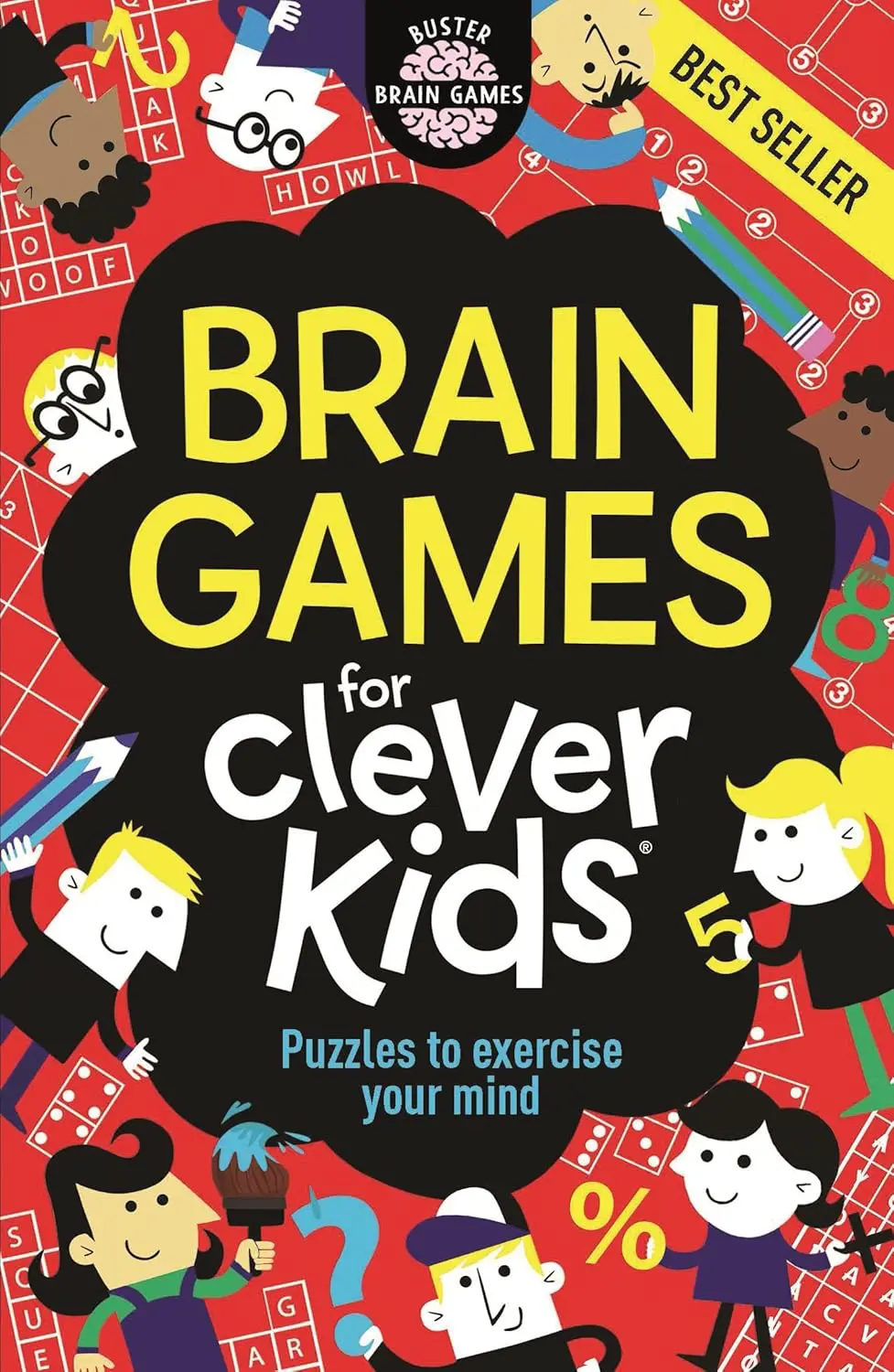
Ideal for on-the-go learning, this puzzle book for children includes more than 90 brain-teasing activities like memory, word and number workouts, as well as Japanese puzzles such as hanjie, kakuro and sudoku. The book’s puzzles get progressively harder and are designed for kids ages 7-11.
Trivial Pursuit:
Try the Family Edition that has two sets of cards — one for adults and another for the kids. The questions hit the same categories of geography, entertainment, history, arts and literature, science and nature, sports and leisure as the traditional game, but with age-appropriate content. Collect all six wedges to win!
Highlights:
Remember this kid-friendly publication from your childhood? They are still around. Get a puzzle book subscription starting at $5 per month. Choose the age level that suits your child. Bonus fun is getting something in the mail just for them.
Learning Levels
Developmental sequencing changes as children grow. Here’s a look at the primary processing functions per age range.
- Infants: Sensory learning, attachment, imitation
- Toddlers: Exploration, language explosion, repetition
- Early childhood: Imagination, concrete thinking
- Middle childhood: Logic improves, better memory and attention
- Adolescence: Abstract thinking grows, emotional intensity increases
Brainiac Facts
Our brains are fascinating. Here are some cool things about this important organ.
- Your brain runs on about 20 watts of power, which is roughly enough to power a dim light bulb.
- The brain itself cannot feel pain. That’s why brain surgery can be performed while a patient is awake.
- Babies are born with more neural connections than adults. As kids grow, the brain deletes unused connections to become more efficient.
- Teen brains are especially sensitive to rewards and social feedback, which helps explain why peer influence feels so intense during adolescence.
-Tali Benjamin