

Why Recess Matters
Kristin Cheatwood Photography
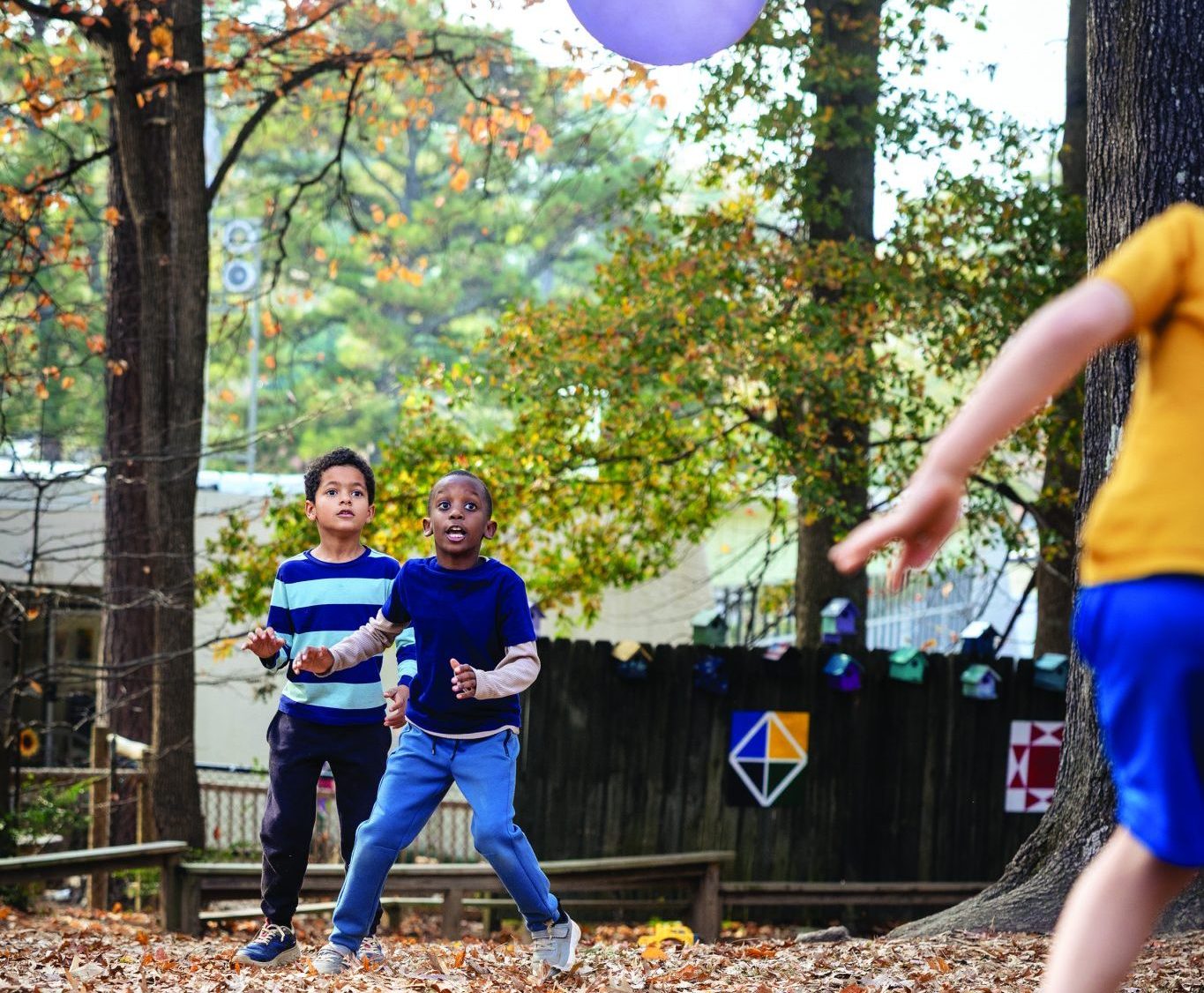
When test scores drop, students need more time in the classroom to boost their scores. Right? That was the thinking of a local school district that cut elementary recess time to 15 minutes this fall. However, child psychologist Dr. Molly Kramer explains that “regular breaks for physical activity can actually improve focus and cognitive performance when children return to the classroom.” The benefits of recess don’t end with improved focus and academic success, though. Increased recess time also has significant physical and social-emotional benefits.
Academic Benefits
While some schools are cutting recess in hopes of boosting test scores, the research reveals the irony. Among the numerous academic benefits of recess cited by the Centers for Disease Control and Prevention (CDC) are improved grades, test scores, memory, attention and concentration.
Dr. Debbie Rhea, a professor of kinesiology and founder of the LiiNK Project, a 10-year study on the long-term benefits of increased recess, has also seen noteworthy — and nuanced — academic benefits.
“In Kindergarten through 2nd grade, we actually see slightly lower math and reading scores in our schools with 60 minutes of recess vs. our control schools that have 30 minutes of recess. What we found in 3rd grade is that the 60-minute recess kids are now tied with the 30-minute recess kids on their first standardized test results. But then, in 4th grade, they directly switched positions. The kids with 60 minutes of recess were gaining in academics, going up 10% in math and 6% in reading in one school year. The kids with only 30 minutes of recess dropped below the average they had in 3rd grade. The kids with short recesses are facing burnout by 3rd grade. We see this trend continue for the rest of elementary school,” says Rhea.
Rhea cautions against the short-term thinking of teaching to the outcome of standardized testing.
Physical Benefits
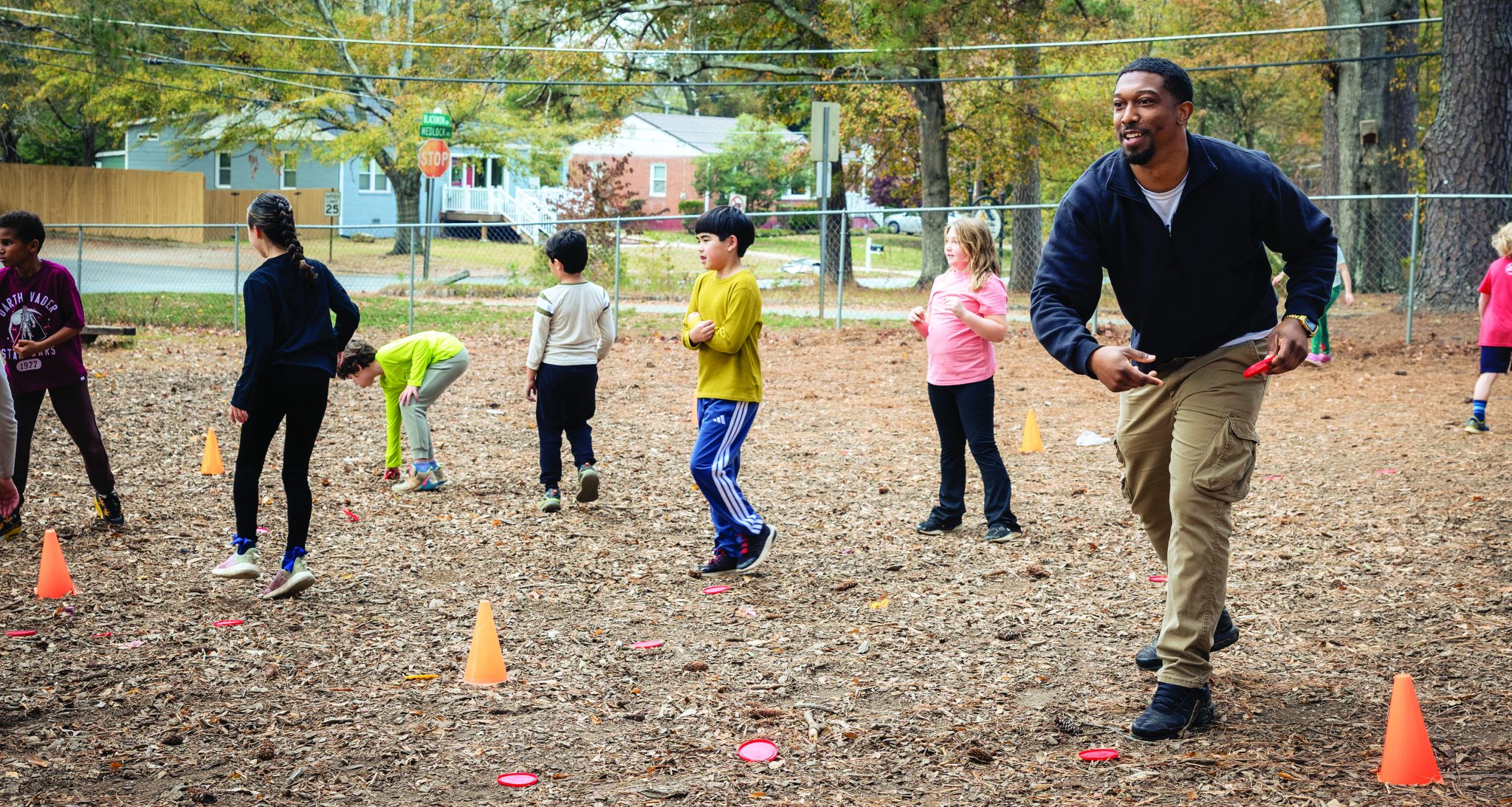
The physical benefits of recess are obvious — and significant. More time to run and play improves sleep quality, strengthens the body and enhances motor skills.
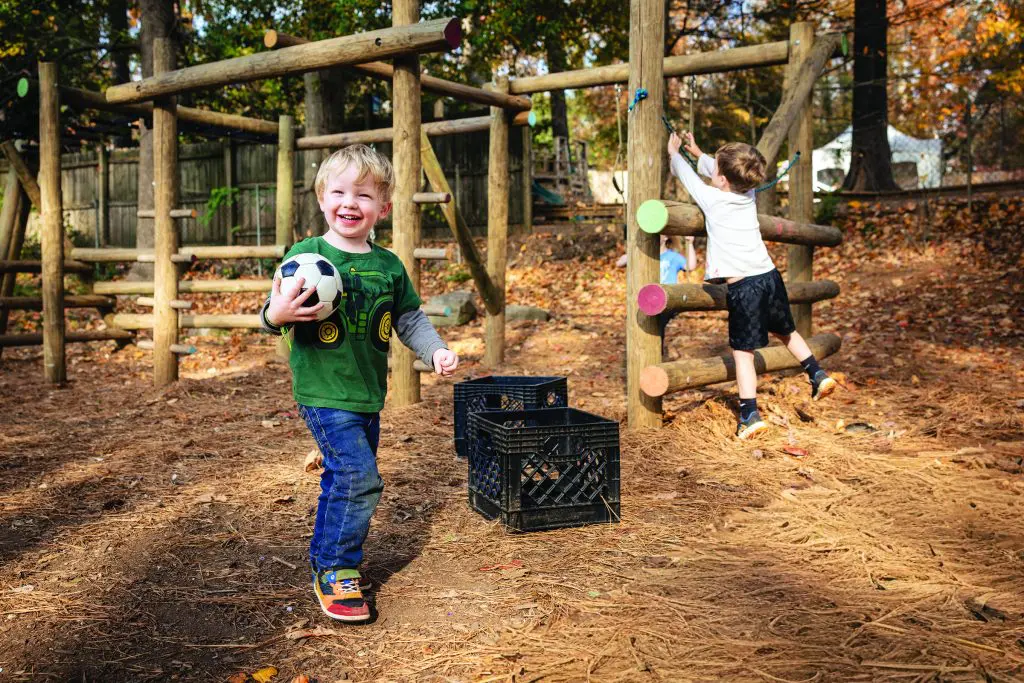
For her son, Kristin Cheatwood intentionally selected Hess Academy, a Decatur school that offers three recess times per day. She reflects, “At his previous school, where he had 20 minutes of recess per day, he’d come home exhausted, collapse on the sofa, and still struggle to fall asleep at night. Now, he comes home energized and eager to play, and when bedtime comes, he falls asleep quickly and stays asleep all night. It’s been such a clear, positive transformation.”
There has been a significant increase in the number of repeat injuries being seen in school-age children. The common denominator: kids are spending more time playing sports, but less time in free play. The LiiNK project has found that a lack of free play time leads to limb imbalance, which can easily result in injuries. Rhea concludes, “Play is how you truly develop both sides of the body to build a strong body that isn’t prone to injury.”
Kristin Cheatwood Photography
Social-Emotional Benefits
Cheatwood also noticed strides in her son’s social-emotional development after an increase in recess time. “His ability to remember and share what he’s learned has skyrocketed. He comes home eager to tell me about both his academic lessons and the social or emotional skills he’s practicing. Before Hess, if I asked what he learned, he’d usually shrug and say, ‘I don’t remember.’ Now, he can’t wait to tell me everything.”
Principal Lisa Kelly of Intown Community School observes that “young children need time outside to learn how to resolve natural social conflicts with one another. They need to learn how to play together and compromise without adult interference, so they can build those skills they’ll need later. I would argue that our older students need that as well, as they learn to navigate a different set of social circumstances.”
Why Recess Is Having a Moment in Atlanta
In 2022, Georgia seemingly made a nod to the importance of recess, passing a state law requiring daily recess in all public elementary schools. What was missing from the law? In addition to a variety of loopholes (exceptions for field trips, bad weather and physical education days), there were no minimum recess times required.
When the school year started in August, many Atlanta-area parents had the painful realization of why a minimum was needed: DeKalb County cut elementary school recess to 15 minutes. While some schools in the county were already allotted only 15 minutes, many had previously been given 20 to 30 minutes. No official announcement was made about the cut. The alarm spread quickly.
A group of parents rallied, founding “30 for Recess” and petitioning for elementary schools to have at least 30 minutes of recess per day. The group was successful in DeKalb; all elementary schools in the county will require 30 minutes of recess starting this month.
However, there are still no state minimums, and the amount of recess can be decided on a county-by-county basis.
There is no easy answer to what is the “right” amount of recess, but there is no doubt that recess has a myriad of benefits. Perhaps, if we zoom out to consider the overall health of children, giving them the space and time to play and grow, we might discover that they developed a love of learning along the way.
Kristin Cheatwood Photography
What You Can Do
Educate yourself on the benefits of recess and discuss with your child’s teachers and administrators.
Walk or bike to school to get movement in before the day starts.
Provide free, unstructured play after school and on weekends, especially at parks and in nature.
Check out the 1,000 hours outside project.
Talk to your school about starting a “Let Grow Play Club” that fosters more unstructured, creative play before or after school.
Benefits by the Numbers
Academic Benefits:
40% reduction in off-task behavior
67% of recess activities involve midline-crossing physical activities, which have been shown to increase cognitive function
10% higher standardized test scores by 4th grade
Physical Benefits:
12x more likely to have healthy body fat percentage
6% decrease in overweight and obese body fat in one year
70% of students achieve age-appropriate motor skills
Social/Emotional Benefits:
70% less chronic stress and anxiety
17% report an increase in positive emotions during play
*Source: LiiNK Project research center at Texas Christian University
– Jennifer V. Hutcheson