

The Magic of Making Up Stories
 What if one of the best ways to help children build confidence, strengthen communication skills and spark their imagination started with a blank page? Creative writing at home may not look like homework or a formal lesson, yet it can have a powerful impact. In fact, some of the most meaningful writing happens in the spaces between everyday routines, where imagination has room to wander and children discover that their ideas are worth putting into words. Plus, it’s an opportunity for kids to process their experiences and grow into thoughtful, resilient thinkers.
Practical Benefits
Writing builds more than vocabulary, reading comprehension and grammar expertise. It helps develop self-expression and confidence. “I think the most important benefit is developing empathy,” says Vanessa Reid, English teacher and the director of The Weber Writing Project at The Weber School in Sandy Springs.
“Helping them to know themselves better and connect with others is a gift. Imagine a skill that allows you to be better at everything you do, including being human. That’s creative writing!”
Communication and collaboration skills are also bolstered as kids experience the joy of storytelling. “I have watched my creative writing students break down barriers, bare their souls and celebrate each other’s touching, painful, beautiful, priceless stories,” says Reid.
Creative writing also gives children regular opportunities to practice turning ideas into something tangible, which can serve them well as they get older. From writing a college essay, giving a presentation or pitching an idea at work years down the road, creative writing is the starting point.

Getting Started
Think of creative writing as a form of play. Adults often carry negative experiences from school or life around certain subjects. “First and foremost, make it fun,” says Reid. “For parents to build their own confidence, they should remind themselves that there are no stakes here.
Make mistakes. Fumble and laugh. Just have fun and be silly. Remember, there is no final exam or paper at the end. There is no end. Just play.”
Start small and do it together. “As a fiction writer and creative writing teacher, I write with my students and show them everything — warts and all,” says Reid. “We come up with writing prompts together, draft together and share our terrible, messy first drafts. Then, we look for the gems like an engaging character, lovely detail or touching moment.”
You can get your kids involved in creative writing before they can read. “Creative writing began as the oral tradition of storytelling, and young ones and their families can enjoy creating and telling stories with one another in the car, at the pool or before bed,” says Reid. “I have fond memories of my grandfather’s delightful tales about a cast of forest creatures who helped one another overcome obstacles.”
She also recommends visual imagery or performing arts to get younger kids started with creative writing. “Cut out pictures from magazines of settings, characters and a conflict or problem to overcome and create storyboards. Older kids can create captions or scripts,” says Reid. “Encourage imagination so that children can dream about the possibilities and connect with images that are meaningful to them. The story will come naturally from their authentic perspective if their minds can wander.”
Encourage your child to keep a journal and model the behavior by keeping one yourself. You can turn the activity into part of your evening routine. “What they write is less important than how frequently they do it,” says Reid. “If they have a hard time getting started, I love a gratitude journal. My own daughter and I did this when she was in elementary school.”
She recommends prompts such as: What are you grateful for today? What little thing made you happy? Then, ask them to describe it. What did that moment look like, feel like, smell like? “In creative writing, the joy is in the details and in getting the vision down on paper,” says Reid.
Building a shared family practice of creative writing can do more than help your child become confident and creative or better in school. It can create shared memories and, as Reid notes, that’s the sweetest story of all.

Now, Try It!
The key to getting kids to write at home is making it feel creative, purposeful and low-pressure. Here’s how to do it:
Let them choose what they write.
If a child is interested in a topic, they are more likely to be passionate when it comes to writing about it. Suggest writing about a favorite hobby or sport or creating an alternate ending to a loved movie or book.
Keep interesting supplies nearby.
Set up a writing space with interesting options for pens and pencils, notebooks and more.
Celebrate their work.
Display stories on the fridge or read one to the family at dinner. Have your child video call a grandparent to share their story. When kids feel proud of what they created, they are more likely to want to do it again.
Model it yourself.
Keep your own journal and carve out 10 minutes a day for family writing time. Kids learn more from seeing something done than being told to do it.
Use fun prompts.
Get the creative juices flowing with a quick question or idea. These can be funny, imaginative or connected to real-world scenarios. Here are some we love:
- If you woke up invisible for one day…
- Invent a new holiday.
- Write from your pet’s perspective.
- Design a new amusement park ride.
- What would happen if gravity stopped for five minutes?
- Your backpack is actually a portal to another world.
- You switch places with your favorite fictional character for a day.
- Every time you sneeze, you travel to a different place.
Writing Resources
Get some support for creative writing at home with these tools.
 Story Cubes. These are great to use with younger kids. Each side of the dice has a different graphic on it and can be used to put together oral or written stories. There are several collections including classic, actions and voyages. Find them at storycubes.com/en/
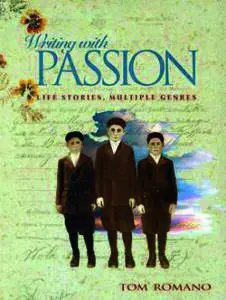 “Writing with Passion: Life Stories, Multiple Genres” by Tom Romano. This book is an enjoyable read with fun ideas and examples from the author on how to write about your life experiences.
Story Jumper. Kids can create their own printed books through this online tool. Children can write, illustrate, design and even narrate their books with their own voice or can collaborate with family members to document family histories. Learn more at storyjumper.com.
– Tali Benjamin