
Facing the Boo! Understanding Kid Phobias
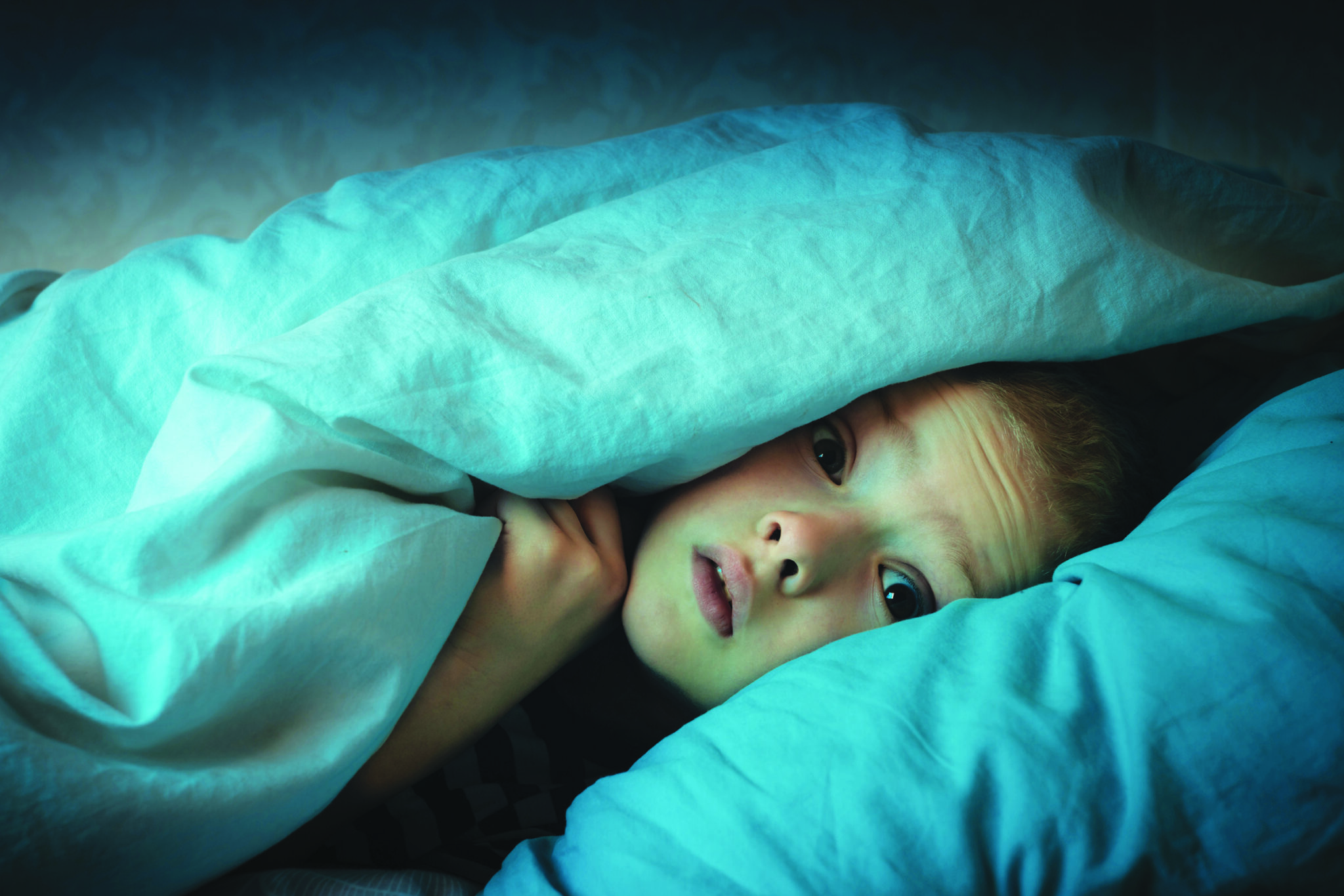
“I can’t go to sleep—I’m afraid of the dark.” It’s a phrase many parents have heard, often at the exact moment the lights go out. Sometimes, it’s a clever delay tactic or a bid for one more story. But for many children, that fear feels very real—racing hearts, vivid imaginations, and an overwhelming sense that something isn’t quite right.
While childhood fears are a normal part of growing up, some worries can take on a life of their own. Left unaddressed, they may deepen into persistent anxieties or even full-blown phobias that affect daily routines, social interactions, and overall well-being. Understanding the difference between a passing fear and something more serious can be challenging for even the most attentive parents.
To help navigate these moments, Atlanta Parent spoke with local experts about what warning signs to watch for and how families can support children in building confidence and resilience—before those fears become lifelong challenges.
What Fear Looks Like in Kids
Children’s fears are a normal part of development, and often reflect a child’s growing imagination, awareness of the world, and need for safety. What scares a toddler is very different from what worries a preteen.
“Intensity, duration, and functional impact are the primary factors we look at when differentiating typical, developmentally appropriate fear from a clinically significant fear/phobia,” explains Dr. Shannah Edwards, a clinical psychologist at Anxiety Specialists of Atlanta.
Edwards says some warning signs that your child might have a phobia are:
- extreme reactions such as panic, screaming or freezing that are out of proportion to the actual level of danger.
- avoidance behaviors such as refusing to go to school, a friend’s house or outside.
- physical symptoms, like recurrent stomachaches or headaches.
“The anticipation of danger causes physical symptoms – what we think of as fight or flight,” says Edwards. “This anxiety develops into phobias when tied to a particular object or situation.”
Common fears for preschoolers include loud noises, animals or insects, as well as the dark or imaginary things like monsters. Older kids may be afraid of being separated from loved ones, doctors or being sick; they may have school- or social-related fears of being left out or failing academically. Often, kids will outgrow a fear or simple conversations can help them manage it.
“When fear is interfering with daily life and the ability to complete necessary and basic tasks or if things are getting progressively worse, seek help,” says Matthew Robb, clinical director of Rooted Rhythm Therapy.
If you are considering therapy to help your child overcome a phobia, exposure therapy is an option. The process starts with providing psychoeducation about physiological processes of anxiety so that children can understand and better cope with physical symptoms of anxiety. Edwards prompts patients (and parents) to draw “an anxiety monster” to help name their physical symptoms and identify when they start.
“The next step is helping children identify and restructure negative thoughts that are contributing to their fears,” says Edwards. “Finally, exposure therapy involves facing the feared stimuli in a planned, graduated, and structured manner, so children gradually develop distress tolerance to physical symptoms anxiety while simultaneously experiencing the feared object without the feared outcome happening.”
Play therapy is also an option and works well for younger children. “Play therapy works because play is the fundamental language of children and connects their nervous system response to safety and process feared scenarios in a safe and supported way,” says Robb. “I recommend it for any child to help build an understanding of the body’s natural responses to the environment, and to build communication and self-regulation skills.”
Formal CBT doesn’t typically begin until early school age, but parents can start addressing a fear at home through gentle exposure, calming language, and modeling as early as two years old. “In general, it is never too early or too late to start overcoming a fear,” says Edwards.
Whether through therapy or at home, children don’t need to be pushed out of fear, they need support moving through it. “The goal is not to eliminate fear,” says Robb. “It is to allow kids to feel capable and empowered in the face of it. With the right support, a child can move through even their biggest fears with confidence, thus building resilience.”
 Support at Home
If your child tells you they’re afraid of something—or you start to notice signs that a fear is becoming more intense—it’s important to take it seriously and respond thoughtfully. It can be tempting to brush it off or offer quick reassurance, but how you handle those moments really matters. The right approach can help your child feel heard, supported, and more in control, while the wrong response can unintentionally make the fear feel bigger or more isolating.
Here are some tips from our experts to use at home:
- Validate the feeling without agreeing with the fear. This might sound like: “I can see this feels really scary for you.”
- Regulate your own emotions and stay calm. Children feed off of our emotions, so it’s important to approach feared situations with a sense of confidence.
- Explain that fear does not equal danger. This might sound like: “Our worry brains make us feel scared of – insert fear – does not mean that we’re not safe.”
- Encourage brave behavior. Even if it’s doing something that seems really small like looking at a picture of a dog, for a child that’s afraid of dogs.
- Model that fear is normal in an age-appropriate manner. This might sound like: “Mommy’s tummy hurts sometimes and she gets really nervous to talk at work meetings. I’m going to be brave and ask a question at my next meeting.”
- Avoid saying things like “you’re fine” or “there’s nothing to be afraid of.”
- Engage with your child in a compassionate tone without judgment or coercion.
– Tali Benjamin