
Turning the Page: How Atlanta Families and Experts Are Embracing Literacy
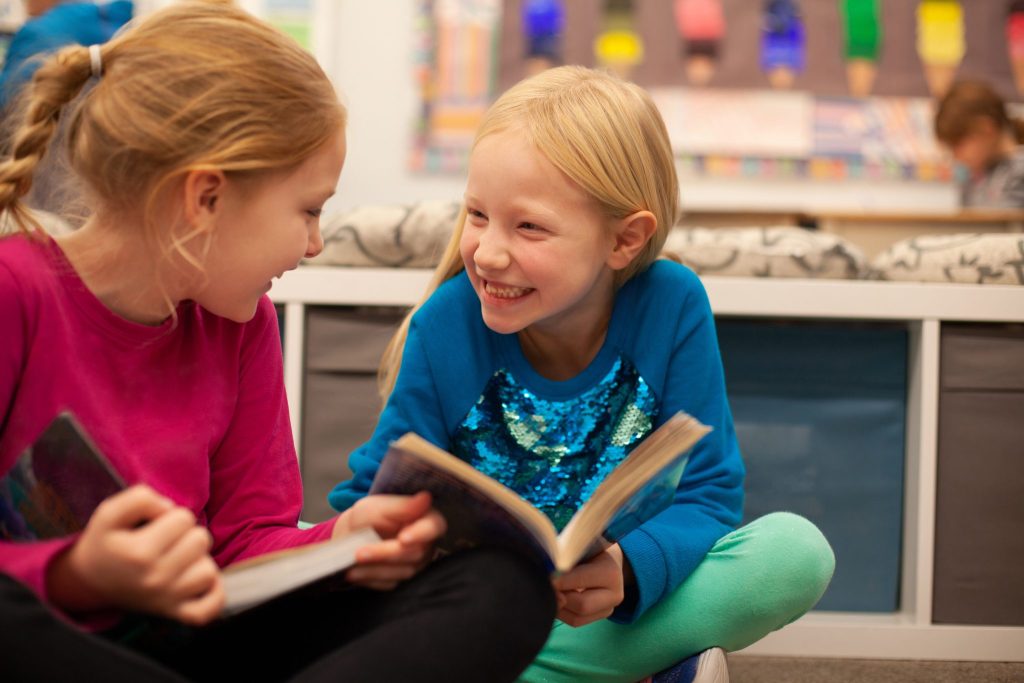
When parents think about children’s literacy, picture books and chapter books often come to mind. But, it’s helpful to remember that children learn to read — learn through reading — many different ways. Nonfiction books build curiosity and knowledge, graphic novels support comprehension and confidence, and activity books and early readers help children practice essential skills.
Atlanta Parent spoke to some local experts about why literacy matters and what families can do at home to nurture a love of reading.
Eric Litwin, Children’s Book Author
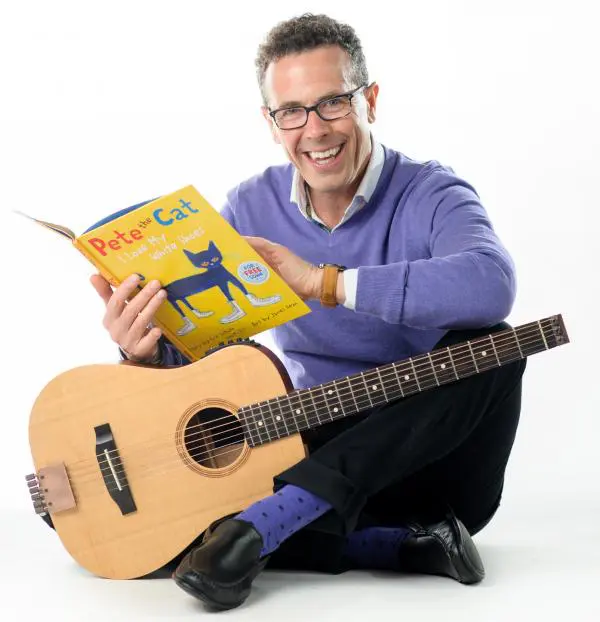
Eric is the original author of “Pete the Cat: I Love My White Shoes,” the first of the series, and so many other books. While he now lives in Virginia, he’s from Decatur, where he began his writing career.
What He Wants Atlanta Parent Readers to Remember: “Books can be more fun than any electronic device could hope to be!”
Q: What inspired you to want to become an author?
A: I was an elementary school teacher who became very concerned that learning to read must now compete with electronic devices. I felt early literacy needed to adapt in order to compete and be successful. So, I left the classroom and became a storyteller/musician to add human interactivity into early language and reading experiences. I gave hundreds of assemblies at schools throughout the Atlanta metro area every year. The artist James Dean, also in the Atlanta area, had a wonderful folk art character named Pete the Cat. We decided to work together, and we created the book “Pete the Cat: I Love My White Shoes.”
Q: How did you incorporate music into some of your books and how does that add an interactive feature?
A: I add music and musicality to all my books. It helps with engagement, fluency, expression and joy. Some of the musical parts are repetitive so the children and parents sing them together. It helps make reading more fun and filled with human interaction. You do not need to be a musician to add music to language and books. Anyone can do it.
Q: How can parents support literacy?
A: Parents can turn their homes into language and print playgrounds filled with books, songs, posters, signs, poetry, jokes and conversation. Parents can turn off or minimally use electronic devices in the home as they immerse their children in joyful and engaging language and print when they are together. Parents can build routines around books, such as reading together every night before bedtime.
Patty Reeber, Youth Services Manager at Gwinnett County Libraries
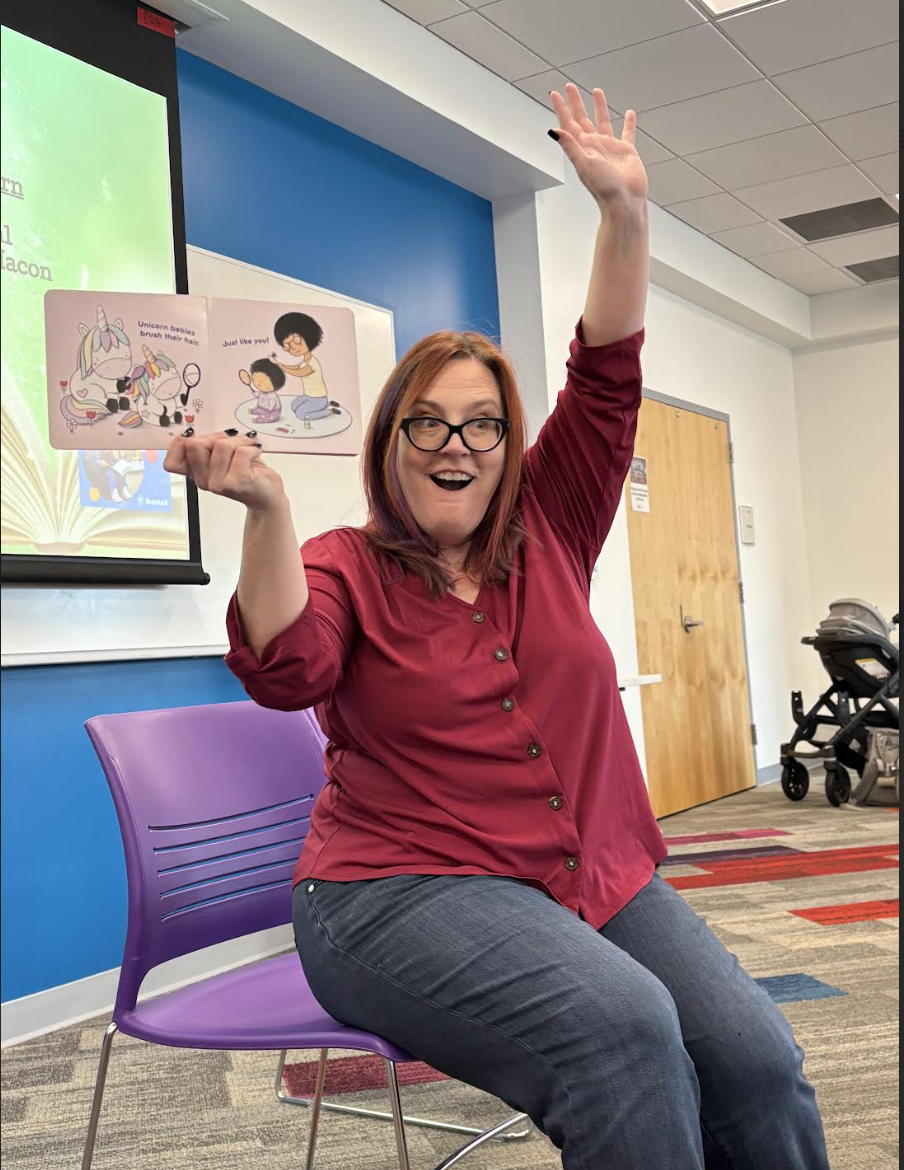
What She Wants Atlanta Parent Readers to Remember: “For 60% of people, learning to read is hard, and nobody likes to do hard things. But if your child has positive feelings about books and pleasant memories of being read to, they will want to push through what is hard to learn how to read.”
Q: What advice do you have for both parents and children on literacy goals for the new year?
A: I would suggest introducing a family reading time. That can be a time when everyone is reading their own book, or a book you read together as a family. Taking time out of the day when everyone puts their phones down and picks up a book for 20 minutes can have a huge impact on your child’s literacy skills. You are showing them in a very clear way that you think reading is important. Plus, it can be a great family bonding activity.
Q: What impact do you think nontraditional children’s books has on literacy?
A: Graphic novels are HUGE! Kids love them. I know some parents think reading a graphic novel or comic book “doesn’t count,” but it actually engages more of the brain, because children are using their visual literacy as well. Being able to read the written words and then understand what is going on in the story by combining what you are reading with what you are looking at can help strengthen comprehension skills. If you’re reading a cookbook, you are also using math skills and demonstrating your ability to follow a series of instructions. One of the reasons we track minutes in our Summer Reading Challenge instead of number of books is that we do not care WHAT you are reading — it’s the reading that is important. We really want to stress reading for pleasure.
Q: Why do you think reading different kinds of books is important?
A: Reading non-fiction books is a fantastic way to introduce more vocabulary to a child. Children who are exposed to a wealth of words have larger vocabularies when they start school and are ahead of their peers in learning to read. An auditory learner may lean toward audiobooks. I love the touch and feel of books for little children. Having a texture they can feel and associate with the words adds to the reading experience.
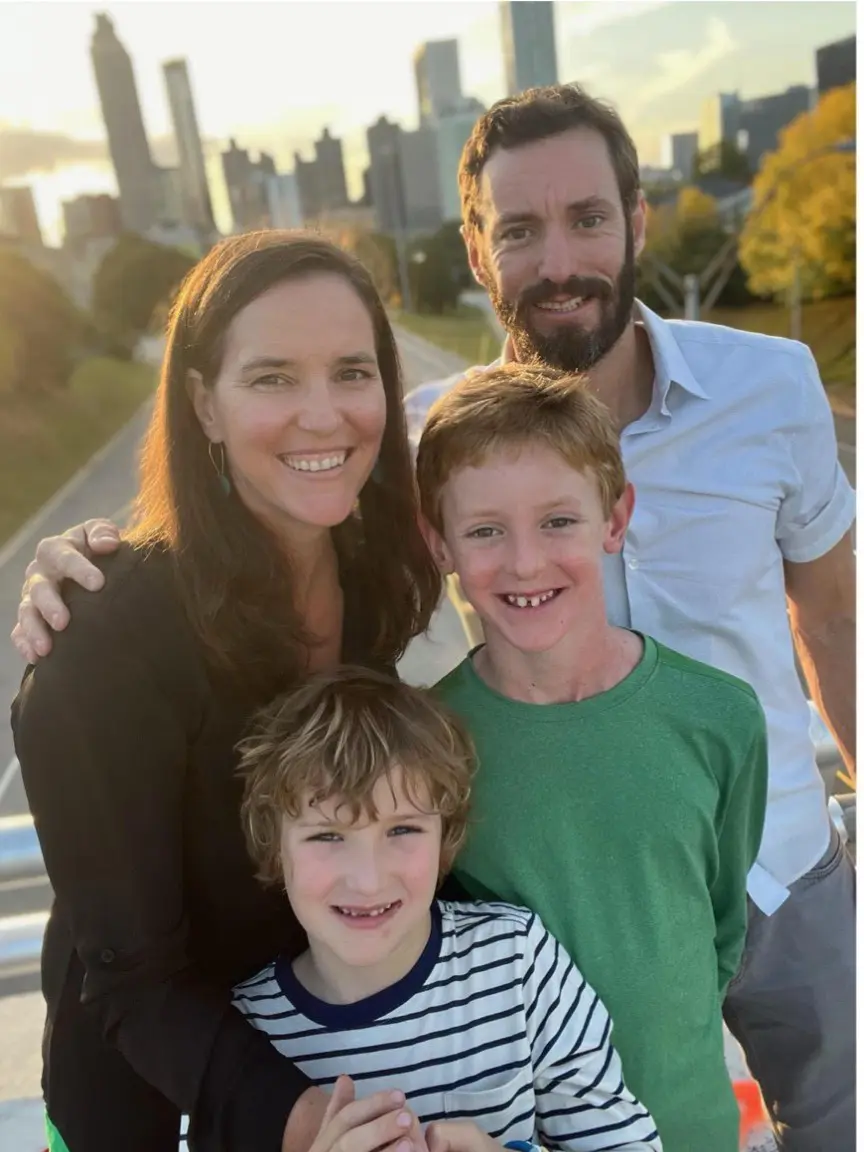
Anne-Marie Debacker, Intown Atlanta mom of two, ages 9 and 13
What She Wants Atlanta Parent Readers to Remember: “Literacy is still the foundation for how we communicate, solve problems and create change. Literacy matters because it underpins all learning.”
Q: How do you, as a parent, support literacy?
A: Parents support literacy by modeling the habits we hope to see in our children. When I talk about the books I’m reading or choose to read during my free time, I’m showing my kids that reading is something I value.
Of course, the most timeless strategy is reading to your children every night for as long as you can. Strong readers naturally ask questions as they read, so modeling that curiosity is powerful. Simple prompts like “Where do you think they are?” or “Who do you think is talking?” help build comprehension.
Q: How can children’s books help young readers explore new perspectives, cultures or life experiences?
A: Youth literature does an incredible job of sharing stories that are vastly different from our own. Through reading for fun, my kids and I have learned about big, important topics like coping with anxiety at school, being a first-generation student, understanding the story behind marriage equality and more. We can never fully be in someone else’s shoes, but we can read their stories and learn from them.
Q: How do you think reading through hands-on learning can help with literacy?
A: When my kids were first learning to read, I used hands-on opportunities all the time. If we were baking bread, I’d point to the recipe and ask, “Which kind of flour should we get out?” At restaurants, I’d point to simple words on the menu like “hot dog” and say, “Can you tell me what this says? I’m having trouble seeing it.”
Q: What advice do you have for both other parents and children on literacy goals for the new year?
A: Commit to modeling a love of literacy for your children. Visit your local library regularly, talk about the books you’re reading and share stories within your community. When children see the adults in their lives valuing books, they’re far more likely to develop their own reading habits.
Kimberly Sharp, School Librarian at Ivy Creek Elementary in Buford
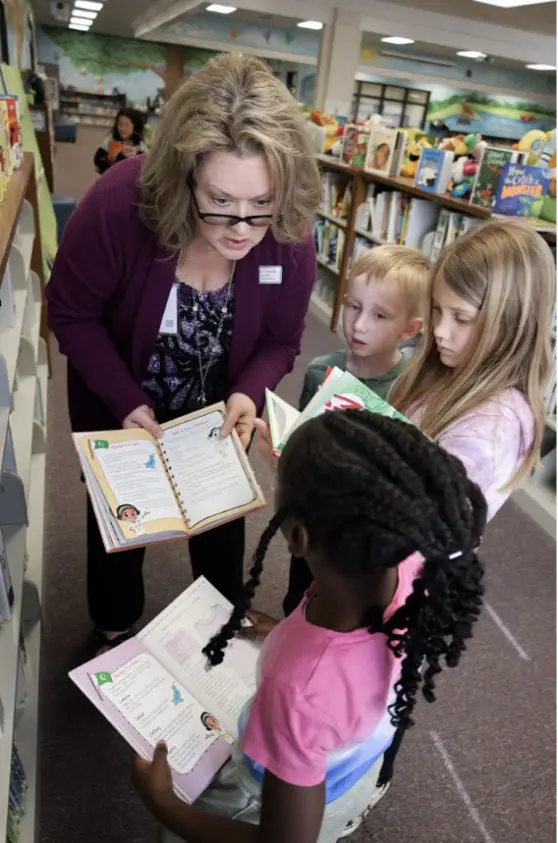
What She Wants Atlanta Parent Readers to Remember: “There is no app to replace your lap! The time you share reading as a family will leave your children with a positive memory of you and of reading.”
Q: What advice do you have for both parents and children on literacy goals for the new year?
A: Focus on creating meaningful reading experiences with your children. Schedule time to read together — bedtime is great — and don’t skip any pages (they’ll know!). Have siblings read to one another. Read your own books silently together in the same room or read a book aloud to the family. Warm blankets, yummy snacks and hot chocolate make it extra special. Read a book and do a related activity together. Listen to an audiobook in the car when you are traveling together. Remember, it doesn’t have to be perfect! Teach them that reading can be fun and you’ll be creating lifelong readers!
Q: What inspired you to become a librarian?
A: I have loved to read for as long as I can remember. My mom often took me to the public library with instructions that I could only check out as many books as I could carry! I remained an avid reader throughout school and drew close to my grandmother over our shared love of books. As a classroom teacher, I was inspired by librarians who made reading exciting for my students. This career has enabled me to share my love for reading, help kids find books they enjoy, and enhance my school community’s experience by having the library at the center.
Q: Why do you think reading different kinds of books is important to literacy?
A: As a librarian, ALL types of books come to mind when thinking about what will appeal to children! Our non-fiction collection is just as popular as our novels and picture books. As children grow and develop, their interests change along with their ability to read and comprehend what they are reading. I am a strong advocate for giving children autonomy to choose the books they want to read. Once they fall in love with reading, the possibilities for learning are endless!
Books that inspire children to create something on their own have an added appeal, not to mention significant educational value. They engage students in an entirely different way from a novel or a story. Creativity is such an important part of a child’s growth and development. Giving children books with projects and activities they can successfully complete adds another layer of fun to their learning experience. I personally love cooking with the young children in my family!
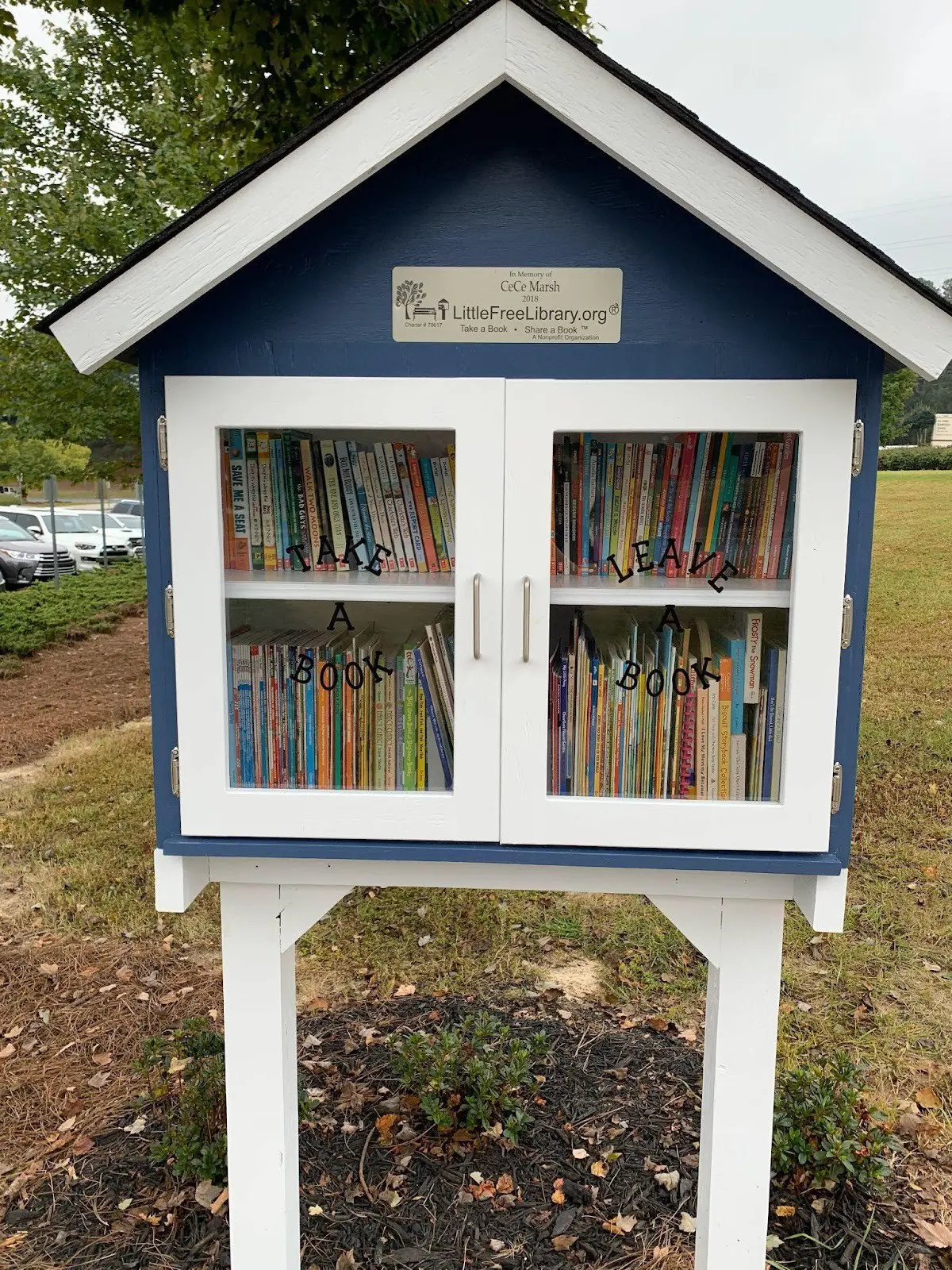
Little Free Libraries: Voices from the Community
If you don’t already know, Little Free Libraries are a fun and free way to promote literacy. Found in neighborhoods across Atlanta, these “take a book, leave a book” spots make reading accessible to everyone. Here’s why people love them.
- “In a traditional library, you search for what you already want, or you browse curated displays. With a Little Free Library, you never know what you’ll find. Often, you stumble upon something you didn’t even know you were looking for.” — Anne-Marie Debacker, parent of two, Morningside/Virginia-Highland
- “I think they’re amazing because everybody can borrow books, even without a library card!” — Nellie Dolph, 3rd grader, Ivy Creek Elementary
- “Little Free Libraries are one of the most accessible literacy tools we have. They remove barriers by putting books directly into neighborhoods where kids can reach them without formality or pressure. To me, they signal shared responsibility, a community saying, ‘Books belong to all of us.’” — Kimberely Houston, children’s cookbook author, Fayetteville
- “I LOVE free libraries! There is one at school and my youngest absolutely loves picking out a new book from it and then donating books we don’t read as much anymore. She looks forward to visiting the Little Free Library, and she gets excited about what new-to-her book she can pick out. I don’t believe in selling our used books as I think books are something that should be accessible for all, so I think it is such a wonderful way to share books and the love of reading with other families.” — Briana Stenard, avid reader and mom of two, Buford
- “[Little Free Libraries are] like little magical book birdhouses that pop up in neighborhoods. Take a book, leave a book. No stress. No overdue notices.” — Michael Rawls, school librarian, Morningside Elementary
—Tessa Scharff