

Why School Is Harder for Kids Today: Challenges Their Parents Never Faced
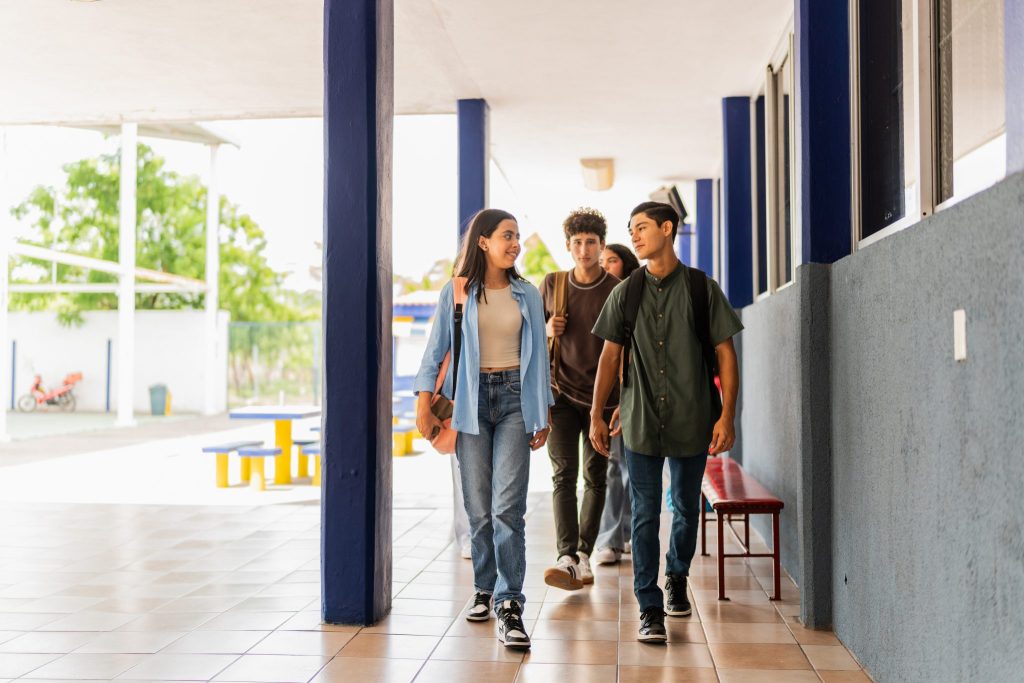
Life at school for today’s students is, in many ways, just like it’s always been – learning, friends, recess, lunch, homework. With technology, a more competitive landscape and safety concerns, there are challenges that are new to this generation. Parents should be aware of these factors to help their students be successful and happy.
Taking tests on a computer.
Technology is everywhere in today’s classrooms. Most school systems and private schools in metro Atlanta start providing student devices as early as Kindergarten. Students are used to making PowerPoint presentations and typing assignments and essays instead of handwriting them. Test taking is also now tech-centered with kids answering a question on the screen before moving to the next one. This adds a new level of pressure to get the answer right the first time.
Remembering which platform to use.
Schools use various apps and online systems to manage assignments, store student records, share resources, communicate and more. It can be a real challenge for students to remember where to find a homework assignment or which folder a study guide might be in.
Having instant access to grades.
Real-time grading gives parents and students immediate access to grades. While these apps can be helpful in keeping track of student performance, it can also be overwhelming. Students can compare their scores with peers before they have time to process their own performance. It also changes parent-student interactions around grades since by the time a student arrives home, the parent is already aware of a test grade — good or bad.
Participating in active shooter/lockdown drills.
Heightened security measures are now routine at schools. Even Kindergarten students practice being quiet in a dark room or closet in case of an active shooter incident. Other schools have metal detectors or require students to wear ID lanyards to help keep the campus safe.
Being constantly connected.
Just like the lines between work and home have become blurred for parents, for today’s students, things like group texts and learning portals have brought school into the home in a more intrusive way than traditional homework ever did. Notification dings and assignment reminders pop up on school laptops or tablets. Peers share information or ask questions via chat apps at all hours of the day and night. Bullying can also come home in the form of cyberbullying. The inability to “turn school off” is a new reality for today’s students.

Experiencing academic pressure early.
In the ’80s, students might have been in the redbird or bluebird reading group. In the ’90s, students were in the A, B or C group. Now, students are on-level, advanced or accelerated. They are aware of the labels and what they mean, not only for themselves, but compared to their peers. This leads to higher expectations from a younger age. Frequent standardized testing and more rigorous curriculum options at earlier grades, as well as competitive college admissions start to influence academic decisions even in middle school. Add to that, more structured options after school with a focus to specialize in a specific sport, club or activity. Today’s students have packed schedules and pressure to perform well at it all.
Navigating social media.
School can be tough, especially for kids who may not have a lot of friends. Conflicts, comparison and social dynamics no longer stop when the school day ends. Now, kids know who is hanging out after school and on the weekends. They can continue an argument via text or app messaging. The idea of “public” adolescence is also a challenge for today’s kids. Every action can be recorded, shared or posted, so it is much harder for students to make a mistake without the whole world knowing.
Changing of social norms.
Conversations around gender identity, sexual orientation and diversity are much more open than they were decades ago. Students today have to navigate more complex social expectations around sensitivity and inclusivity.
Analyzing information overload.
Kids have access to unlimited information, which is helpful but also overwhelming. Learning to judge what’s accurate or safe online is now essential. Thanks to their constant access to media, students today are also growing up with exposure to world events much earlier and more intensely than previous generations. This contributes to both opportunity of understanding the world around them and other people, as well as anxiety about war, pandemics and other crises.
Every generation faces challenges the previous ones didn’t, but understanding what today’s students are experiencing at school is crucial in empowering kids, making better educational decisions and bridging the communication gap.
-Tali Benjamin