
Beyond BFFs: How Kids Are Redefining Friendship
The idea of “best friends” has long been romanticized and often appears in children’s books and films. Think Harry and Ron. Or Woody and Buzz. A childhood best friend is someone who sticks with you through playground spats and high school crushes. They’re beneficial because they’re the person you can confide in, laugh with and cry to through the ups and downs of childhood and adolescence.
Science supports this ideal, too. A study from the “American Journal of Psychiatry” found that close friendships can improve stress responses and boost self-esteem. But as social norms shift, some experts say it’s time to broaden how we think about these close connections.
Why the Idea of Best Friends Is Changing
In today’s hyper-connected world, it’s tempting to believe that more “friends” equals deeper relationships. Kids can text, video chat and game with friends or total strangers before they’ve even mastered long division. They scroll past selfies, birthday shoutouts and “BFF” tributes on social media long before they fully understand what “best” friendship really means.
But does this constant connectivity add up to real closeness?
The answer: maybe. Since today’s kids are often finding connection in more flexible ways, meaningful relationships don’t always fit the old “BFF” mold anymore. Plus, some experts say it’s time to let go of the idea that every child needs one “best friend” to be happy or socially successful. Instead, the focus is shifting toward helping kids build a diverse network of meaningful relationships.
As clinical psychologist Dr. Michelle Gorenstein-Holtzman explains: “What friendship looks like can vary depending on the child, but having people in your corner still matters.”
For some children, this might mean a handful of different friends who each meet different needs: a classmate to sit with at lunch, a neighbor to ride bikes with, a teammate to celebrate wins with, or even an online friend who shares a love for a particular game or hobby.
Do Best Friendships Still Matter?
Yes, but not in the way many parents might assume. According to psychologist Eileen Kennedy-Moore, author of “Growing Friendships,” not having one or two close best friends doesn’t mean a child is lonely or socially behind. “It’s important to remember that having a best friend is not the same as being generally well-liked by peers,” she explains.
In fact, childhood friendships are often more fluid than we realize. A study published in “Psychological Science” found that only 1% of seventh-grade best friendships lasted through twelfth grade. Even in early elementary years, shifting interests, changing classrooms and developmental growth can reshape a child’s social circle quickly.
When Best Friend Culture Backfires
While close friendships can be deeply meaningful, too much emotional intensity, especially to the exclusion of others, can be harmful. Psychologists call this behavior “co-rumination,” and studies show it can contribute to anxiety and depression. Plus, when a tightly bonded friendship ends, the emotional fallout can feel overwhelming for kids.
That’s one reason some schools have controversially discouraged the concept of “best friends.” Psychologist Barbara Greenberg doesn’t support banning the term altogether, but she sees the value in encouraging broader, more inclusive social groups. “A focus on having best friends indicates there’s an unspoken ranking system,” she says. “And where there is a ranking system, there are problems. My hope is that if we encourage our kids to broaden their social circles, they’ll be more inclusive and less judgmental.”
Why Parents Are Worrying About Friendships
In a world where screens often compete with real-world interaction, many parents worry that their kids are socially disconnected. A University of Michigan C.S. Mott Children’s Hospital poll found that 90% of parents believed their children would benefit from more friends, and half said their child faced at least one barrier to making friends, like shyness or social awkwardness.
Not surprisingly, 75% of parents reported trying to help their child build friendships through playdates, extracurricular activities or structured social events. But even well-meaning parents can unintentionally limit their child’s social growth. According to Sarah Clark, co-director of the Mott poll, two-thirds of parents said they prefer their children’s friends to come from families similar to their own.
Clark urges caution here. “Limiting a child’s friends to only those from similar backgrounds may hamper their ability and comfort in navigating diverse networks in the future,” she explains.
Are Online Friendships Real Friendships?
It’s easy to assume online relationships are shallow or fleeting, but experts say they can be surprisingly meaningful. “I don’t think we need to demonize online friendships,” says educator Linda State. “Some kids find friends online who share their interests. They’re part of an online tribe.”
Still, digital relationships come with their own challenges. Clark recommends that parents who allow social media remain involved and proactive. “Parents who choose to allow social media should help their child learn to use it responsibly,” she says.
That means setting boundaries, discussing red flags and helping kids maintain a healthy balance between their online and offline relationships.
Why It’s OK if Your Child Doesn’t Have a Best Friend
Experts agree that having a variety of friends, instead of one ultra-close best friend, is not just acceptable, it can be healthy. Childhood friendships are expected to shift and evolve. Losing friends, gaining new ones or not having a “BFF” at all isn’t failure. It’s normal.
What’s more important is that kids learn the skills needed to form solid connections: empathy, kindness, communication and conflict resolution.
Instead of encouraging kids to seek out one “perfect” friendship, we can help them build a circle of supportive, diverse and lasting relationships. Those kinds of varied relationships might be the real marker of a connected, resilient childhood.
Tips For Helping Kids Build Healthy Friendships
- Don’t Apply Pressure: Know that different friendships can meet different emotional and social needs, and accept when your child doesn’t have one best friend.
- Teach Emotional Intelligence: Model empathy, active listening and conflict resolution. All are cornerstones of lasting relationships.
- Facilitate Group Connections: Encourage your child to participate in group activities like Scouts, clubs or sports where they can meet other kids in a low-stress, collaborative environment.
- Normalize Friendship Changes: Kids may feel like friendship shifts are failures. To soften the blow, remind them that it’s normal to drift apart and that new friends are right around the corner.
- Help Them With Social Skills: Some children benefit from roleplaying. Demonstrate how to join a group, how to ask to play, and how to hold a conversation. Testing their skills out on you will help build their confidence.
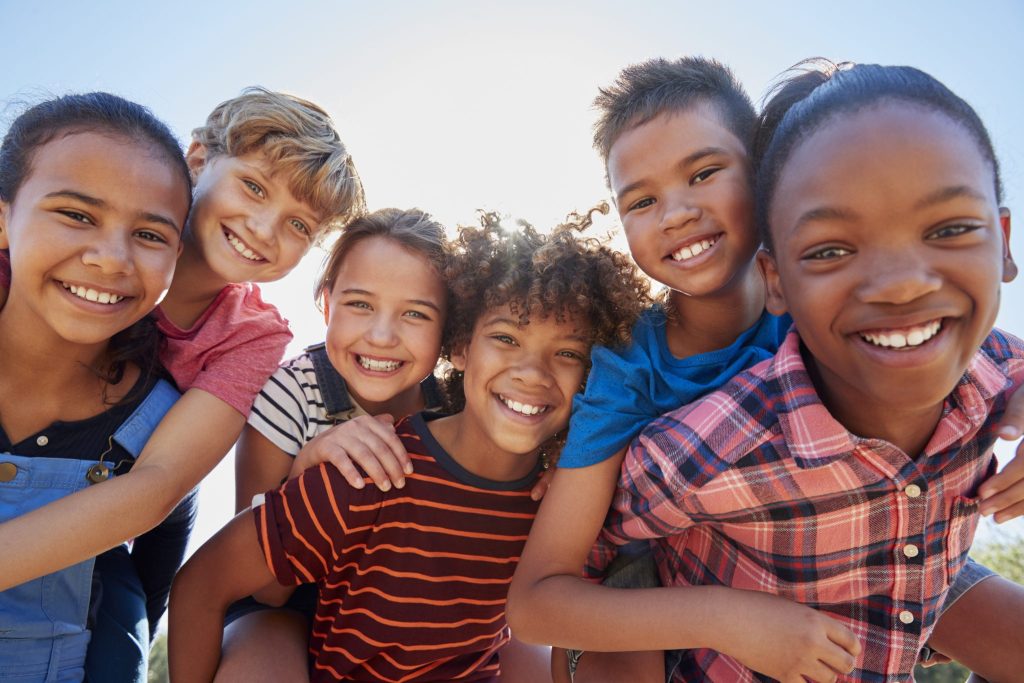
- Broaden Social Circles: Encourage friendships with kids from diverse backgrounds to promote open-mindedness and flexibility.
- Monitor Social Media with Guidance, Not Fear: Teach kids how to stay safe online while nurturing both digital and real-world connections.
-Shannon Dean