

‘Egg’-cited for Easter Crafts
Table of Contents
Easter is one of the best crafting holidays. The yellows, pinks, blues and greens made popular by the holiday make for cheery decorations throughout the house. After dyeing eggs, take a stab at these non-traditional – but adorable crafts.

Make a Scene
You can turn eggs into anything – or anyone! Glue paper arms and legs onto your eggs to make them into characters. Give your egg a hairdo by gluing on some yarn. Create your own egg family by printing out templates from mrprintables.com/easter-crafts-for-kids-egg-people.html
Cut out the templates and wrap them around to fit the eggs. Use tape or glue to hold the ends together.
Cut out the arms, place and fold them over the edge of the top (like in the photo), or glue to the sides as you like.
Place your eggs in the paper and draw funny faces or decorate as you want.
Courtesy of mrprintables.com

Empty out your Egg
Decorating a hollow eggshell allows you to save and display your delicate creations for years to come. Follow these instructions from the “egg-sperts” at PAAS.
Use a pin or needle to make a hole in the fat end of a raw egg. Wiggle the needle around or use a nail to create a slightly larger hole. The hole should be about ¼ inch across.
Make a smaller hole in the opposite end of the egg. Insert the needle into the egg to break the yolk. Use your mouth to blow into the small hold to remove the egg yolk and egg white into a larger bowl. When the egg has been removed from the shell, run water through the eggshell to rinse it.
Courtesy of Paaseastereggs.com
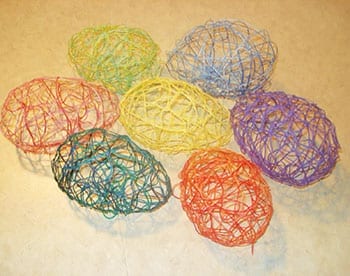
String Eggs
These eggs made of hardened string are an easy and affordable way to decorate. You’ll need various colors of craft string, water balloons, Elmer’s glue and water.
Blow up the water balloons in various sizes.
Mix equal parts Elmer’s glue and water in a medium bowl.
Dip the string into the glue mixture and wrap the string around the balloon.
Let dry for about 2-3 hours. Pop the balloon once the string is dry, pull out the balloon pieces and enjoy the darling Easter eggs.
Courtesy of Renee Cundick, the5cundicks.blogspot.com
TIP: Don’t use fresh eggs when making hard-boiled eggs, because they’re much more difficult to peel. Eggs purchased at supermarkets are generally at least three weeks old, so they should work fine.
Tips for a Successful Egg Hunt
Egg Hunt Etiquette:
Let’s face it, we’re competitive by nature. Finding the most eggs seems like the goal of most hunters, but for younger kids egg hunts should be about surprises and treats, not about winning or losing. Talk to the kids about keeping the egg hunt fun for everyone by leaving the more obvious eggs to be found by the younger crowd.
Egg Hunt Tips:
Make a batch of eggs with an equal number of colors and assign each child a color; ask each child to only hunt for eggs that are “their” color. (Eggs in colors assigned to older kids can also be harder to find.)
Change up what’s inside the egg. Eggs can be filled with special notes, scavenger hunt clues, stickers, small toys, money and candy.
Mix up the hiding spots. If there are “go to” secret spots to hide eggs, chances are the kids will remember them from last year. Strive to hide eggs in less obvious spots: in the mailbox, underneath the car, or in a bicycle’s basket or spokes.
Atlanta is home to Easter festivities and egg hunts galore. Toddlers through 12-year-olds can hunt for eggs and treats and enjoy a visit from the Easter bunny. See our roundup of metro-area egg hunts and Easter celebrations.
– Kate Wallace